Darts 501 Rules: Scoring, Doubles and How to Check Out
501 is the format you see on television and the one most players learn first. Two players start on 501 and race down to exactly zero. It is a simple idea with a catch: the final dart must land in a double. That one rule turns the end of a leg into a little maths puzzle.
How the board scores
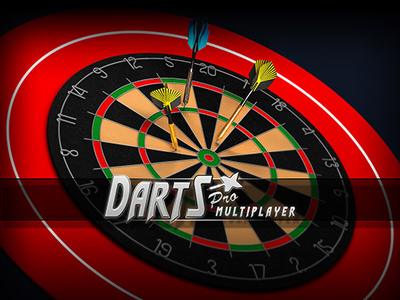
The board has 20 numbered segments. The numbers are not in order: 20 sits at the top between 5 and 1, which punishes wild throws.
- Single: the large areas of each segment, worth the number shown.
- Double: the thin outer ring, worth twice the number.
- Treble: the thin inner ring, worth three times the number.
- Outer bull: the green ring around the centre, worth 25.
- Bullseye: the red centre, worth 50. It counts as a double for finishing.
How a 501 leg works
- Each player throws three darts per turn.
- The total of the three darts is taken off their score.
- You must finish on exactly zero, and your last dart must be a double or the bullseye.
The bust rule
If your turn leaves you below zero, on exactly 1, or on zero without a double, you have bust. Your score returns to what it was before that turn, and any remaining darts are lost. You can never finish from 1, since no double is worth 1.
The scoring phase
While your score is high, aim for the treble 20. It is worth 60, the most from a single dart, and three of them make the famous 180. A strong leg uses as few darts as possible. The minimum is nine, which is why a nine-darter is a perfect game.
If your grouping tends to drift, the treble 19 is a sensible alternative. The numbers around the 19 are 3 and 7, which are less costly misses than the 1 and 5 beside the 20.
Checking out
Once your score is 170 or under, you can finish in a single turn. 170 is the highest checkout possible: treble 20, treble 20, bullseye. The table below covers finishes worth learning first.
| Score left | Darts to throw |
|---|---|
| 170 | T20, T20, Bull |
| 121 | T20, 11, Bull |
| 100 | T20, D20 |
| 80 | T20, D10 |
| 60 | 20, D20 |
| 50 | 10, D20 (or Bull) |
| 40 | D20 |
| 32 | D16 |
| 16 | D8 |
Why players love 32 and 40
Good finishing relies on doubles that split well. If you aim at double 16 (32) and hit single 16 instead, you have 16 left, which is double 8. Hit single 8 and you are on 8, which is double 4, and so on down to double 1. Each miss into the single still leaves a double. Double 20 (40) works the same way: a single 20 leaves 20, which is double 10.
Odd numbers do not split like this. If you are left on an odd number, use your first dart on a single that brings you to an even one.
Tips for the game and the real thing
- Be consistent. Repeat the same action every time. Accuracy comes from repetition more than from strength.
- Choose a target before you throw. Aim small and your misses will stay closer.
- Plan two darts ahead. Work out your finish while you still have a choice about the scoring dart.
Setting up a real board
If the game gets you interested, the official measurements are simple. The centre of the bull sits 1.73 metres (5 ft 8 in) above the floor, and the throw line, known as the oche, is 2.37 metres (7 ft 9¼ in) from the face of the board.