Backgammon for Beginners: Rules, Openings and Basic Strategy
Backgammon is one of the oldest board games still played, and its appeal has never been complicated. A beginner can beat a strong player on a lucky night, but over a hundred games the stronger player will come out well ahead. That mix of luck and skill makes it a pleasure at any level.
The board
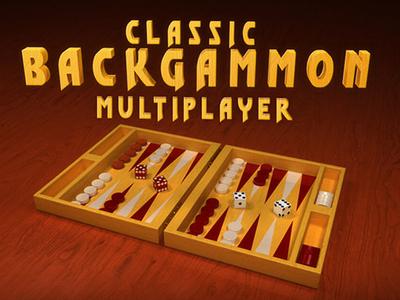
The board has 24 narrow triangles called points, split into four quarters of six. Each player has 15 checkers. You move in one direction and your opponent in the other, around a horseshoe path toward your home board. The bar is the raised strip down the middle.
The goal
Move all 15 of your checkers into your home board, and then bear them off. The first player to bear off all 15 wins.
How a turn works
- Roll two dice.
- Move one or two checkers according to the numbers. A 5 and a 3 can be played by one checker moving eight points, or by two checkers moving separately.
- If you roll doubles, you play that number four times.
You can land on any point unless your opponent has two or more checkers there. That point is blocked.
Hitting and the bar
A single checker alone on a point is called a blot. If your opponent lands on it, your checker is hit and goes to the bar. You must bring it back in through your opponent's home board before you can move anything else. If all the entry points are blocked, you lose your turn.
Bearing off
When all 15 of your checkers are home, you start removing them with your rolls. A 4 removes a checker from your four-point. If you roll higher than your rearmost checker, you can bear off from your highest occupied point instead.
Good opening moves
You do not need to memorise much, but a few openings are worth knowing, because they build important points early. The notation below shows moves from one point to another, as counted from your own side.
| Roll | Standard play | Why |
|---|---|---|
| 3-1 | 8/5, 6/5 | Makes your five-point, the best point on the board |
| 4-2 | 8/4, 6/4 | Makes your four-point |
| 6-1 | 13/7, 8/7 | Makes your bar point and starts a blockade |
| 5-3 | 8/3, 6/3 | Makes your three-point |
| 6-5 | 24/13 | Runs one back checker all the way to safety |
Three simple game plans
The running game
If you are ahead in the race, get your checkers home safely and avoid contact. Every exchange of hits risks throwing away your lead.
The priming game
Six points in a row form a prime, and an opponent's checker behind one cannot escape. Even four or five connected points can make your opponent's rolls awkward.
The holding game
If you are behind in the race, keep a point in your opponent's half and wait. As they bring their checkers home past you, they may have to leave a blot, and one hit can turn the game around.
Beginner habits to fix
- Stacking. Putting five or six checkers on one point wastes them. Spread them so they can make new points.
- Leaving back checkers too long. The two checkers on your opponent's side get trapped if you ignore them.
- Hitting without thinking. It is usually good, but a hit that leaves you exposed in your own home board can backfire badly.
Scoring extras
If your opponent has not borne off a single checker when you finish, that is a gammon and counts double. If they still have a checker on the bar or in your home board, it is a backgammon and counts triple. Match play often uses a doubling cube, which lets a player offer to double the stakes. A player who refuses simply loses the game at its current value.